


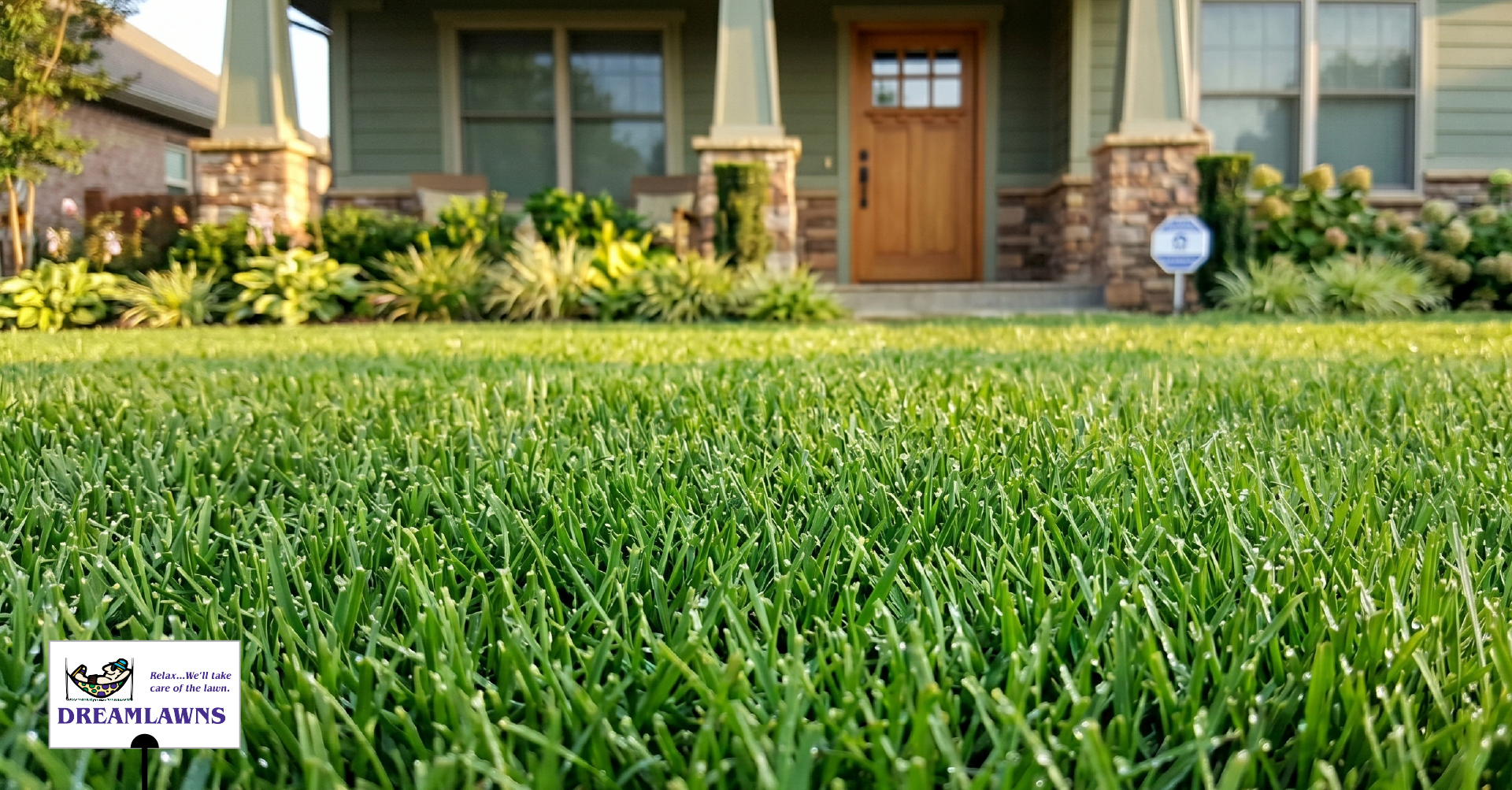
Dreamlawns Quick Cut: Zoysiagrass is the most low-maintenance warm-season grass in Virginia Beach once it’s established. It’s dense, slow-growing, drought-tolerant, and handles more shade than Bermuda. But it’s also the slowest to establish, the last to green up in spring, and among the first to go dormant in fall. Its biggest disease threat is large patch, and its thatch buildup rivals Bermuda for speed. This guide covers everything Zoysia homeowners in Virginia Beach need to know to manage it well through every season.
Zoysiagrass is the most misunderstood grass in Virginia Beach. Homeowners choose it expecting a low-maintenance warm-season lawn and are sometimes surprised to find it slow to establish, among the last grasses to green up in spring, and one of the first to go dormant in fall. That extended dormancy window, potentially five to six months of brown turf in a less favorable year, catches people off guard in a way that Bermuda’s dormancy often doesn’t.
But done right, Zoysia is one of the most beautiful and durable lawns available in this climate. Once established, its dense, carpet-like turf is naturally weed-suppressing, remarkably tolerant of drought and heat, and requires less mowing than Bermuda because of its slower growth rate. For homeowners who prioritize long-term low maintenance over fast establishment or year-round green color, it’s often the best warm-season option available.
This guide covers everything you need to know about Zoysiagrass in Virginia Beach: how it grows, what it needs in each season, and the specific mistakes that trip up Zoysia homeowners year after year. Whether you’re maintaining an established lawn or deciding whether Zoysia is the right fit for your property, consider this your complete reference.
What Is Zoysiagrass and Why Does It Work in Virginia Beach?
Zoysiagrass is a warm-season grass native to Asia that has become well established across the American South and the transition zone. Virginia Beach sits within its comfortable growing range, and the combination of hot summers, mild winters, and coastal soils suits it well. It handles this climate with less stress than it would experience farther north in the transition zone, and its improved cold tolerance relative to St. Augustine makes it a more reliable warm-season option for homeowners who want to minimize winter damage risk.
Several characteristics make Zoysia stand out from the other warm-season grasses in Virginia Beach. Its density is exceptional. Once fully established, a healthy Zoysia lawn forms such a thick, tight canopy that most weeds simply can’t get a foothold during the growing season. Its moderate shade tolerance is better than Bermuda’s, making it workable in yards with partial tree coverage where Bermuda would thin and fail. And its slow growth rate is a genuine advantage for homeowners who don’t want to mow every five days through summer the way Bermuda demands.
Like Bermuda, Zoysia spreads through both above-ground stolons and below-ground rhizomes, giving it good self-repair capability once established. The key caveat is that word “once established.” Zoysia is significantly slower to fill in than Bermuda, and most lawns are installed via sod or plugs rather than seed. The common varieties you’ll find in Virginia Beach residential lawns include Meyer (Z-52), which is coarser-textured and widely used; Empire, which is medium-textured and more shade-tolerant; Zeon, a finer-textured variety with excellent heat tolerance; and Emerald, the finest-textured and densest of the group, requiring the most precise maintenance. For most Virginia Beach homeowners, Empire or Meyer represents the best balance of appearance, performance, and manageability.
What Are the Biggest Challenges of Growing Zoysiagrass in Virginia Beach?
Zoysia rewards patience and proper management, but it has specific limitations that are worth understanding before you install it or before you assume a struggling Zoysia lawn just needs more inputs.
- Slow establishment: Zoysia takes longer to fill in from sod or plugs than any other common lawn grass in Virginia Beach. A plug installation on an average residential lot can typically take about a year to fully establish. Homeowners who expect Bermuda-style fill-in speed are consistently disappointed.
- Extended dormancy: Zoysia goes dormant earlier in fall and greens up later in spring than Bermuda or St. Augustine. In Virginia Beach, that can mean five to six months of brown turf in a year with an early fall cold snap and a slow spring warm-up. This is the single most common reason homeowners switch away from Zoysia despite otherwise liking it.
- Thatch buildup: Zoysia’s extremely dense stolon and rhizome network produces thatch rapidly. Without regular aeration and occasional vertical mowing, thatch builds to a level that blocks water and nutrients from reaching the root zone, weakening the lawn from below while it looks fine from above.
- Large patch disease: Large patch is the primary disease threat for Zoysia in Virginia Beach, appearing at the fall and spring temperature transitions as large, circular orange-brown patches. Like spring dead spot in Bermuda, it’s best managed preventively in fall rather than reactively in spring.
- Slow recovery from damage: Zoysia’s slow growth rate, which makes it low-maintenance under normal conditions, becomes a liability when damage occurs. A Bermuda lawn can recover from significant damage within a few weeks in summer. Zoysia can take most of a growing season to fill back in from the same level of damage.
What Is the Right Mowing Height for Zoysiagrass?
Mowing height for Zoysia depends partly on the variety you have, but for the vast majority of Virginia Beach homeowners using a standard rotary mower, the practical range is 2 to 3 inches. Higher mowing heights within that range slightly improve Zoysia’s shade tolerance, which is a meaningful advantage on properties with any tree cover. Cutting too low is a common mistake, and because Zoysia recovers from scalping stress slowly, the cost of getting it wrong is higher than with a faster-growing grass like Bermuda.
Mowing Height Guidance
- Standard rotary mower (most homeowners): 2 to 3 inches. This is the practical, forgiving range for Virginia Beach residential lawns and the height Dreamlawns recommends for most properties.
- Reel mower on a well-leveled lawn: Lower heights are possible for the small number of homeowners with reel mowers and carefully leveled turf, but this requires very frequent mowing, sharp blades, and a level surface to avoid scalping.
- Higher within the range is better if your lawn has any shade. The extra blade length improves light capture where sun is limited.
The One-Third Rule
The one-third rule matters more for Zoysia than for Bermuda because Zoysia recovers from scalping much more slowly. If you let the lawn grow to 4.5 inches and then cut it to 3, you’ve removed roughly a third of the blade, which is right at the limit. Let it get away from you further than that, and the resulting brown, stressed appearance can take two to three weeks to recover in Zoysia, compared to a few days in Bermuda. Mowing on a consistent schedule during the growing season keeps growth within the one-third limit and avoids this problem entirely.
Mowing Frequency
Zoysia’s slow growth rate is one of its most appealing practical qualities. During peak summer growth, most Virginia Beach Zoysia lawns need mowing every seven to ten days rather than every five to seven days like Bermuda. During the spring green-up period and fall slowdown, frequency drops further.
Mowing doesn’t stop entirely in winter. One or two mowings per month through December, January, and February help reduce disease pressure by keeping the canopy from matting down, and during the warm snaps common in Hampton Roads winters, light mowing can stimulate a small amount of growth. Winter mowing also supports weed control, since winter weeds that go unmowed are far less likely to respond to herbicide treatment. As the lawn transitions into spring, return to a regular schedule once it’s greening up and growing consistently rather than at the first sign of color.
Blade Sharpness
Zoysia’s dense, wiry blades dull mower blades faster than most grasses. A dull blade tearing through Zoysia leaves a frayed, whitish appearance that the lawn carries until the damaged tips grow out. This is more visible on Zoysia than on other grasses because of how tightly it grows. Check and sharpen mower blades more frequently than you would for other grasses, at least twice per growing season for most homeowners, more for those mowing regularly through summer.
How Should You Water Zoysiagrass in Virginia Beach?
Zoysia’s drought tolerance, once established, is one of its strongest selling points. It handles dry periods better than Fescue or St. Augustine and is comparable to Bermuda in its ability to go semi-dormant during extended drought and recover when moisture returns. The right watering strategy leverages that drought tolerance rather than working against it.
The Basic Framework
- Target approximately 1 inch of water per week during the growing season, including rainfall, slightly less than Bermuda or St. Augustine requires
- Deliver in one or two deep sessions rather than daily shallow watering
- Water early in the morning, before 9 a.m., to minimize evaporation and reduce large patch and other fungal disease risk
- Allow the soil to dry between sessions. Zoysia’s drought tolerance means it performs well under slightly drier conditions than Fescue or St. Augustine require, and consistent overwatering accelerates thatch buildup and large patch pressure
Drought Tolerance in Practice
When Zoysia enters drought-induced semi-dormancy, it shows the same signals as Bermuda: blue-gray coloration, visible footprinting, and leaf blades that roll or fold to conserve moisture. This is a survival response, not permanent damage. As long as the drought hasn’t been severe enough to kill the rhizomes, Zoysia will recover when moisture returns. For guidance on distinguishing drought stress from heat stress or disease, see our guide on drought stress vs. heat stress.
Newly Established Zoysia
The drought tolerance that makes established Zoysia so manageable does not apply to newly installed sod or plugs. Sod and plugs have not yet rooted into the native soil and have no moisture reserve to draw from. For the first two to four weeks after installation, water daily or even twice daily to keep the root zone consistently moist until the grass has established contact with the native soil. From there, gradually reduce frequency over several weeks until you reach the normal deep-and-infrequent schedule.
Winter Irrigation
Turn irrigation off entirely once Zoysia enters dormancy in the fall. Dormant Zoysia needs no supplemental water in Virginia Beach’s winter climate. Running your system through dormancy wastes water and creates the wet, cold soil conditions that favor large patch fungal activity during the temperature transition periods in fall and spring.
Signs Your Watering Needs Adjusting
- Blue-gray tint and footprinting: drought stress, water soon
- Leaf blades rolling or folding: the grass is conserving moisture
- Soft or spongy soil that stays wet between sessions: overwatering, reduce frequency
- Large patch appearing at seasonal transitions: often linked to excess moisture. Review watering practices alongside fungicide treatment
What Does a Zoysiagrass Fertilization Schedule Look Like in Virginia Beach?
Zoysia is a lighter feeder than Bermuda. Its slower growth rate means it uses nitrogen more slowly and responds poorly to the kind of aggressive fertilization that Bermuda thrives on. Overfertilizing Zoysia is one of the most common mistakes homeowners make. It pushes excessive growth that accelerates thatch buildup, increases large patch disease pressure, and can produce soft, disease-susceptible turf that looks lush but performs poorly. A thoughtful fertilization program for Zoysia in Virginia Beach is measured and seasonal, not heavy.
When to Start: After Full Green-Up
Do not fertilize Zoysia until it has fully greened up from winter dormancy and nighttime temperatures are consistently above 55°F. Because Zoysia greens up later than Bermuda or St. Augustine, this often means waiting until early to mid-May in Virginia Beach rather than late April. Fertilizing before the grass is actively growing pushes weak top growth that the root system can’t support and increases the risk of disease in the early spring period when large patch is still active.
The Summer Feeding Schedule
Once active growth is established, one to two additional fertilizer applications through the summer months are typically sufficient for Zoysia. This is notably less than the four to six week schedule that Bermuda demands. Space applications six to eight weeks apart and use moderate nitrogen rates rather than the higher rates appropriate for Bermuda. The goal is steady, healthy growth that maintains density without pushing the kind of rapid top growth that leads to thatch and disease problems.
Iron for Color
Iron applications are particularly well-suited to Zoysia because this grass responds visibly and positively to iron supplementation without the growth surge that nitrogen produces. Iron improves the deep green color that makes an established Zoysia lawn so attractive while keeping growth rates controlled and thatch buildup in check. If your Zoysia looks pale or yellowish during the growing season without obvious signs of stress, an iron application is often a better first step than adding more nitrogen.
When to Stop
Stop nitrogen applications by early September, especially fast-release nitrogen sources. Unlike Bermuda, which can take nitrogen through mid-September in Virginia Beach, Zoysia should have its nitrogen feeding wrapped up earlier to allow adequate time for the grass to harden off before cooler temperatures arrive. Late-season nitrogen is one of the primary contributors to large patch severity in Zoysia, making the September cutoff a disease management decision as much as a horticultural one.
This applies specifically to nitrogen, not to fertilization as a whole. Zoysia still benefits from other nutrients heading into fall and winter. Potassium in particular supports cold tolerance and disease resistance, and depending on soil test results, other nutrients may be appropriate through fall, winter, and early spring. The goal in fall is to stop pushing top growth while continuing to support the plant’s underlying health and stress resilience.
Potassium and Soil Testing
A potassium application in late summer improves cold hardiness heading into dormancy and is worthwhile for Zoysia, given that cold damage risk, while lower than for St. Augustine, is still a real consideration in hard freeze years. Soil testing every two to three years takes the guesswork out of potassium, pH, and micronutrient decisions, identifying any corrections needed for your specific soil. Nitrogen is the exception. Soil tests don’t measure nitrogen, because the plant uses it too quickly for a soil reading to be meaningful. Nitrogen recommendations are based instead on the grass type and growing environment.
What Weeds Are Most Problematic in Zoysiagrass Lawns?
A fully established Zoysia lawn during the growing season is one of the most naturally weed-resistant turf surfaces in Virginia Beach. Its canopy density physically excludes most weed seedlings by blocking the light they need to germinate and establish. During dormancy, however, that competitive advantage disappears entirely and the brown, inactive turf is as vulnerable to winter annual weeds as any other grass.
Winter Annual Weeds During Dormancy
When Zoysia turns brown in fall, winter annual weeds including chickweed, henbit, and annual bluegrass establish freely in the dormant turf. Because Zoysia’s dormancy window tends to be longer than Bermuda’s, these weeds often have more time to develop before spring green-up begins to suppress them. A fall pre-emergent application in October through early November is the primary defense and should be considered standard practice for any Zoysia lawn in Virginia Beach, not an optional upgrade.
Crabgrass in Spring
Crabgrass germinates when soil temperatures at a 2-inch depth consistently reach 55°F, typically between mid-March and mid-April in Virginia Beach. Spring pre-emergent timed to soil temperature is the most effective defense. One nuance for Zoysia homeowners: because Zoysia greens up later than Bermuda, the temptation to delay spring pre-emergent while waiting for the lawn to show life can result in missed timing. Pre-emergent applications are based on soil temperature and weed seed behavior, not on whether the Zoysia is visibly growing yet.
Nutsedge in Summer
Nutsedge is identifiable by its triangular stem, lighter green color, and faster growth rate, which leaves it visibly taller than the surrounding Zoysia shortly after mowing. It thrives in overwatered areas and those with poor drainage. Selective post-emergent treatments for nutsedge are available and compatible with Zoysia at labeled rates, but multiple applications are typically needed across the season because nutsedge reproduces through underground tubers that survive initial treatment.
Dallisgrass and Perennial Grassy Weeds
Dallisgrass is a coarse, clumping perennial grassy weed that is particularly difficult to remove from Zoysia lawns. It germinates from both seed and rhizomes, grows faster than Zoysia, and has no selective post-emergent control option that removes it without damaging the surrounding turf. Spot treatment with a non-selective herbicide, followed by sod or plug repair of the treated area, is the most reliable approach. Consistent mowing at the correct height reduces dallisgrass seed production and limits its spread.
Herbicide Sensitivity
Zoysia is sensitive to a number of common herbicides that are used safely in other grass types. Products routinely used in Fescue programs can damage Zoysia if applied without careful label review. Post-emergent weed control in Zoysia lawns requires confirming that the product is labeled for use on Zoysia specifically, at the correct rate, and under appropriate temperature and moisture conditions. This is an area where professional guidance reduces the risk of accidental turf damage significantly.
What Pests Threaten Zoysiagrass in Virginia Beach?
Zoysia is generally more pest-resistant than the other grasses in this series, and its dense canopy provides some natural protection against surface-feeding insects. But it has one pest threat that is largely specific to it, the hunting billbug, and remains vulnerable to grubs and armyworms in common with the other warm-season grasses. Because Zoysia’s slow recovery rate makes pest damage more costly and longer-lasting than in Bermuda, early identification matters even more.
Hunting Billbugs: The Zoysia-Specific Threat
Hunting billbugs are weevils whose larvae feed on Zoysia’s stems and crowns during summer and early fall, causing damage that looks almost identical to drought stress: yellowing and browning that doesn’t respond to watering. The adult billbugs are present in spring but cause minimal damage at that stage. It’s the larvae, active from June through September, that create the visible turf problems.
The turf pull test is the most reliable diagnostic. Grab a handful of brown or yellowing Zoysia and pull. If it separates easily from the soil at the crown without roots attached, billbug larval feeding is likely. The larvae themselves are small, legless, cream-colored grubs found just below the thatch layer near the base of the stems. Insecticide timing is critical: applications targeting adult billbugs in spring, before egg-laying occurs, are significantly more effective than trying to control established larvae in summer.
Grubs
White grubs feed on Zoysia’s root system below the soil surface, causing turf to wilt and pull up easily like loose carpet. They are most active in late summer through fall. Zoysia’s slow recovery rate means grub damage that a Bermuda lawn might fill in from within a few weeks can leave bare areas in Zoysia for an entire growing season. Timing insecticide applications to target young larvae in July is significantly more effective than treating mature grubs in fall.
Fall Armyworms
While fall armyworms primarily target Bermudagrass in Virginia Beach, they will feed on Zoysia when populations are high and preferred hosts are less available. Damage appears as rapidly progressing brown patches during late August and September. Check for caterpillars in the early morning hours if rapid browning appears during the armyworm season. For a full breakdown of how to distinguish pest damage from disease and drought, see our guide on why your lawn is turning brown.
What Does a Full-Year Zoysiagrass Care Calendar Look Like for Virginia Beach?
Zoysia’s care calendar is organized around its warm-season growth cycle, its extended dormancy period, and the transition windows in spring and fall where timing has the most impact. Here’s what the lawn needs each month. Keep in mind that “dormant” does not mean “no care.” Zoysia benefits from continued attention through winter, and the work done during the dormant months has a direct effect on how the lawn performs the following season.
January and February: Dormant, but Not Hands-Off
- Mow once or twice per month. Light winter mowing reduces disease pressure, helps with weed control, and can stimulate small amounts of growth during the warm snaps common in Hampton Roads winters
- Continue nutrient applications as directed by your care program. Nitrogen is paused, but potassium and soil-test-driven nutrients still support cold tolerance and disease resistance
- Avoid foot traffic on dormant turf, particularly when frozen or saturated
- Keep the lawn clear of leaves and debris that smother crowns and trap moisture
- Plan spring treatments: pre-emergent schedule, aeration if needed, and first nitrogen application
March: Pre-Green-Up Preparation
- Continue light mowing as needed. Dreamlawns does not recommend scalping Zoysia, which stresses the turf, increases weed pressure, and slows root development. Consistent mowing through late winter accomplishes the cleanup goal without the downsides
- Apply spring pre-emergent for crabgrass as soil temperatures approach 55°F. Don’t wait for the Zoysia to show visible growth, pre-emergent timing is based on soil temperature
- Note any areas that don’t green up with the rest of the lawn as the season progresses, these may indicate large patch disease or other underlying issues
April: Slow Green-Up Begins
- Green-up begins, typically later than Bermuda. Mid-to-late April is normal for Zoysia in Virginia Beach
- Hold off on nitrogen. Wait for full, consistent green growth before applying nitrogen
- Continue mowing at normal height as growth resumes
May: Active Growth Established
- Apply the first nitrogen application once the lawn is fully and consistently green, typically early to mid-May
- Ramp up mowing frequency as growth picks up, targeting every seven to ten days at 2 to 3 inches
- Begin transitioning to a full deep watering schedule
- Schedule core aeration for late May or early June if thatch management is needed
June and July: Peak Growing Season
- Mow every seven to ten days at 2 to 3 inches. Check blade sharpness, Zoysia dulls blades quickly
- Water deeply in the early morning. Maintain consistent moisture without overwatering
- Inspect for billbug larval damage: look for yellowing that doesn’t respond to irrigation, and test by pulling the turf
- Watch for dollar spot in low-nitrogen or moisture-stressed areas
- Complete aeration if not done in late May
August: Late Season Management
- Continue mowing on a regular schedule as growth remains active
- Apply potassium to support cold hardiness heading into dormancy
- Wrap up nitrogen applications by early September
- Watch for armyworm activity, particularly if Bermuda lawns in the area are reporting outbreaks
September: Transition Begins
- Final nitrogen application by early September at the latest, earlier than Bermuda’s mid-September cutoff
- Apply fall pre-emergent for winter weed prevention in late September to early October
- Watch for large patch as soil temperatures drop below 70°F, look for circular orange-brown patches at the lawn’s margins
- Begin reducing irrigation as temperatures drop and growth slows
October and November: Preparing for Dormancy
- Apply preventive fungicide for large patch in October through early November
- Continue potassium and soil-test-driven nutrient applications as directed by your care program
- Mowing frequency drops as growth slows, but don’t put the mower away for the season
- Scale back irrigation significantly as temperatures drop
- Clear leaves and debris regularly as dormancy approaches to prevent smothering crowns through winter
December: Dormant
- Continue light mowing as needed, roughly once or twice per month depending on conditions
- Nitrogen is paused, but other nutrient applications may continue as directed by your care program
- Irrigation off unless an extended dry period is forecast
- Monitor during hard freeze events. Zoysia is more cold-hardy than St. Augustine but less so than Bermuda, and extended temperatures well below 20°F can cause crown damage in vulnerable varieties like Emerald
How Does Dreamlawns Manage Zoysiagrass Differently?
Zoysia requires a fundamentally different management approach from Bermuda in several key areas: lighter fertilization, earlier fall cutoffs, large patch prevention rather than spring dead spot, and billbug monitoring that isn’t relevant to any other grass in the series. Applying a Bermuda program to a Zoysia lawn, or a Fescue program to any warm-season grass, produces consistently poor results for reasons that aren’t always obvious until damage has already occurred.
At Dreamlawns, every Zoysia program is built around the grass’s actual growth cycle and specific vulnerabilities. Spring pre-emergent goes down based on soil temperature, not on whether the Zoysia has greened up yet. Fertilization is moderate and ends in early September rather than mid-September. Large patch preventive fungicide is applied in the fall as a standard program component. Billbug inspections are part of every summer service visit. And herbicide selection for weed control is evaluated specifically for Zoysia compatibility before any application is made.
If you’re comparing Zoysia against the other grass options available in Virginia Beach, our guides to the Virginia Beach Fescue lawn, the Virginia Beach St. Augustine lawn, and the Virginia Beach Bermuda lawn cover each grass in the same depth.
Contact us today to schedule a property assessment. We’ll evaluate your lawn’s current condition, confirm your grass type and variety, and build a program around what Zoysiagrass in Virginia Beach actually needs to look and perform at its best.
Frequently Asked Questions
Zoysia is the last of the common warm-season grasses to green up in spring and the first to go dormant in fall. If your lawn is still brown in mid-April while neighboring Bermuda lawns are greening up, that’s normal. Full Zoysia green-up in Virginia Beach typically happens in late April to mid-May, depending on the year and variety. If isolated areas of the lawn fail to green up by late May while the surrounding turf is fully active, large patch disease is the most likely cause and should be investigated before assuming winter damage.
It depends on what you value. Bermuda establishes faster, stays green longer in the growing season, recovers from damage more quickly, and handles heavier traffic. Zoysia requires less mowing, is more naturally weed-suppressive once established, handles more shade, and has a finer appearance in many varieties. If you want the lowest maintenance warm-season lawn over the long term and can accept a slower establishment period and longer dormancy window, Zoysia is often the better choice. If you want fast results, maximum traffic resistance, or full sun performance, Bermuda has the edge.
Yes. Zoysia goes fully dormant in winter and turns brown, but it comes back every spring as temperatures warm. This is normal dormancy, not damage. The exception is severe cold events that drop temperatures below 20°F for extended periods, which can damage crowns and rhizomes, particularly in finer-textured varieties like Emerald. In most Virginia Beach winters, Zoysia comes through dormancy intact and greens up reliably, just more slowly than Bermuda or St. Augustine.
Lawn Care Services In The Virginia Beach Area
Dreamlawns provides superior lawn care service to Virginia Beach & Chesapeake VA residents.

